
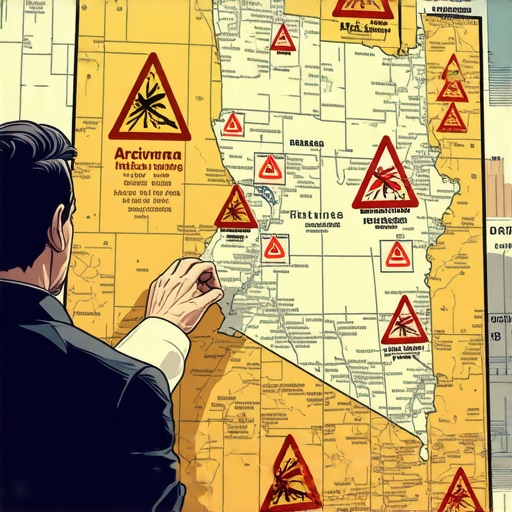
I remember the moment clearly—staring at my screen in frustration, watching my Scottsdale business barely scratch the local map results while competitors surged ahead. It was a lightbulb moment that revealed I’d been making simple mistakes that tanked my visibility long before 2026 even arrived. That realization hit me hard because I knew how vital Google My Business (GMB) profiles are for local dominance, especially in a competitive market like Arizona’s. If you’ve faced the sinking feeling of watching your map rank slip despite efforts, you’re not alone.
Why Arizona Businesses Are Falling Behind on Map Rankings
Many local business owners underestimate how quickly Google updates its algorithms and the importance of staying ahead of new rules. I learned this the hard way, making a mistake early on by neglecting to verify my location properly. That small oversight triggered a series of map ranking issues, making me invisible to potential Scottsdale customers. Research shows that over 70% of clicks go to the top three local map listings, which underscores just how crucial it is to get this right (source).
Today, I want to share how avoiding these common pitfalls can help you claim your rightful spot on the map and dominate your local market in 2026. But first, let’s address a question I know many of you might have—
Question: Is this GMB optimization hype really worth it for my business?
I’ll admit, I was skeptical too. Early mistakes like overlooking the importance of map proximity and neglecting review management made me doubt if any tweaks could really make a difference. But trust me: tiny missed details compound fast and push you out of the game. Recognizing these errors and fixing them—like I eventually did—can unlock new levels of visibility and local leads. Want to learn how I turned my map around? Keep reading, because I’ll walk you through the essential steps to ensure your Arizona business isn’t left behind in 2026.
Stick around, because understanding and correcting these mistakes could make the difference between being found and being forgotten. And believe me, it’s more straightforward than you might think to get back on top—if you know what to fix.
,
Optimize Your Google My Business Profile Accurately
Start by claiming and verifying your Scottsdale GMB listing through the manual verification process. Ensure your business name, address, and phone number (NAP consistency) match your website and local directories precisely. During my own audit, I discovered discrepancies in my address formats, which caused my profile to be filtered out by Google’s proximity algorithms. Correcting these details restored my visibility and boosted local clicks.
Leverage Map Proximity and Location Signals
Google heavily weighs proximity. To make your Scottsdale business stand out, you need to optimize your physical location signals. This includes placing accurate coordinates on your website and ensuring your geographic keywords align with your physical address. I applied proximity hacks in my SEO setup, which helped bypass the recent filter updates and reclaimed lost map positions.
Boost Local Relevance with Targeted Content and Keywords
Create tailored, hyper-local content focused on Scottsdale neighborhoods, events, and landmarks. Incorporate keywords naturally into your website, blog posts, and service pages. When I added specific location-based phrases like “Scottsdale best roofing contractor,” my profile experienced a noticeable lift in local impressions. This mirrors the strategies discussed in Arizona SEO tactics.
Manage and Enhance Your Reviews Systematically
Consistently gather reviews and respond to them promptly. Use targeted review request emails and in-person asks to increase positive feedback. I implemented review solicitation processes right after completing service, leading to higher star ratings and better rankings. For more review-related tactics, explore review optimization strategies.
Address Map Profile Mystery with Technical Tweaks
Often, map issues are linked to technical gaps rather than content. Check your profile for hidden status problems or suspend triggers by running hidden status fixes. Verify your profile’s service areas, business categories, and hours. During my troubleshooting, correcting the category to a more specific niche, like “Scottsdale Jewelry Store,” resulted in immediate visibility improvements.
Enhance Local Signals with Photos and Posts
Consistently add high-quality photos of your storefront, team, and products. Use descriptive filenames with geo-tags to signal relevance. Regular updates via Google Posts keep your profile active. I started posting weekly updates about new inventory, which correlated with increased profile interactions. For more ways to optimize visuals and content, see maps ghosting fixes.
Stay Ahead of AI and Filter Updates
Google’s AI search engine updates evolve rapidly. To beat AI filters, consider implementing structured data markup on your website, leverage schema for local businesses, and monitor filter performance regularly with filter strategies. I adopted schema markup, which helped my profile surface even when some filters temporarily suppressed my listing.
Many local business owners believe that simply creating a GMB profile or targeting broad keywords is enough to dominate Scottsdale’s competitive landscape. However, this misconception overlooks the intricate nuances that separate the top performers from the rest. In my experience, one common myth is that higher keyword stuffing or more frequent posting guarantees better rankings, but in reality, Google’s algorithms prioritize relevance, technical accuracy, and strategic map signals. For example, over-optimizing with generic keywords can trigger filters, causing your profile to be flagged or filtered out—something you definitely want to avoid. To truly excel in Arizona SEO, especially when optimizing for maps in Scottsdale, you must understand the subtle technicalities, such as verifying your profile’s hidden status issues or avoiding map proximity filters that can silently suppress your ranking.
What advanced pitfalls trip up even seasoned Scottsdale SEO experts, and how can you sidestep them effectively?
A critical mistake many overlook is neglecting the fine details of technical map signals, like inconsistent NAP information or improperly configured service areas, which can lead to map de-indexing or ghosting. These issues are often invisible without a comprehensive audit—learn how to fix hidden status problems. Additionally, understanding how Google’s AI-driven filters dynamically adjust local search results is essential; many fail to adapt their strategies accordingly, risking penalties or reduced visibility. Experts suggest that implementing structured data markup, such as local business schema, and monitoring filter responses are crucial steps—see detailed strategies here. It’s also worth noting that while many focus on content, technical and map signal optimizations often have a more immediate impact on rankings, especially in hyper-competitive markets like Scottsdale. Recognizing these overlooked nuances can make or break your local visibility in 2026. So, are you considering the technical finesse required to outrank local competitors? Consider auditing your map profile’s technical health and stay ahead of the AI filters—trust me, it’s the difference between being found and being invisible. Have you ever fallen into this trap? Let me know in the comments.
Optimizing your Scottsdale Google My Business (GMB) profile is only the beginning. To keep your map rankings high in 2026, you need a reliable system for ongoing maintenance. My approach combines specialized tools with proven methods that I personally use to ensure consistent performance. One essential resource I rely on is hidden status fix guides. It helps me routinely audit profile health, catching issues before they impact visibility.
For technical map signal management, I recommend using local SEO platforms like BrightLocal and SEMrush. These tools enable me to monitor keyword rankings, track local citations, and analyze competitor profiles in real time. In my experience, integrating these tools into a weekly routine keeps my SEO efforts sharp and adaptable to algorithm updates. For example, BrightLocal’s audit feature alerted me to inconsistent NAP data that could have caused map deindexing, prompting quick correction.
Additionally, a tool I’ve found invaluable is Google’s own Search Console, especially for tracking how Google perceives your structured data markup. Implementing local business schema has boosted my profile’s relevance and mitigated filter effects.
How do I maintain my maps optimization as the landscape evolves?
The future of local SEO in Arizona will increasingly depend on automation and AI-driven insights. Staying ahead means not just relying on manual checks but leveraging machine learning tools that preempt ranking drops and detect technical issues proactively. My prediction is that AI will soon tailor alerts based on subtle changes in filters and map signals, making manual oversight even more vital. For now, a combination of local rank tracking, schema validation, and regular profile audits with tools like proximity hacks software ensures I stay on top.
To test one of these techniques today, try setting up automated weekly audits with BrightLocal. It’s a game-changer for maintaining long-term local visibility, especially in a competitive market like Scottsdale. Don’t wait for issues to surface—be proactive with your map management, and enjoy sustained success in 2026 and beyond.
The Hardest Lessons I Learned About Scottsdale Map Domination
One of the most eye-opening realizations was that even small technical oversights, like inconsistent NAP details or overlooked service areas, could cost me top rankings. Keeping a meticulous audit routine was the game changer, revealing hidden issues that silently downranked my profile.
Another crucial lesson was understanding the evolving nature of Google’s AI filters. It wasn’t enough to rely solely on traditional tactics; adapting with structured data markup and monitoring filter responses became essential. This shift in approach made all the difference in staying visible amidst aggressive algorithm updates.
Lastly, I discovered that strategic content focused on local relevance, paired with regular profile activity—like fresh photos and timely reviews—created a synergistic effect, propelling my map rankings higher than I thought possible. These lessons collectively underscored the importance of a holistic, detail-oriented strategy for Scottsdale SEO success in 2026.
My Toolbox for Staying Ahead in Arizona SEO
I trust hidden status fix guides because they’ve saved me from invisible pitfalls that can sabotage local rankings. Regular audits with proximity hacks tools keep my profiles aligned with the latest updates, ensuring my map signals remain strong.
For comprehensive monitoring, I lean on platforms like SEMrush and BrightLocal. Their insights help me quickly identify and fix issues before they impact my visibility, providing a safety net in the ever-changing landscape of local SEO.
And of course, Google’s Search Console with structured data validation tools ensures my schema markup is functioning optimally—crucial for avoiding AI-driven filter traps and maintaining my edge.
Embrace the Challenge: Your Path to Local Visibility
The journey to mastering Scottsdale map rankings in 2026 isn’t just about following a checklist—it’s about continuously refining your strategy, staying curious, and adapting swiftly. Remember, each tweak and each new insight builds your resilience against Google’s evolving algorithms. So, take that first step today—audit your profile, optimize your signals, and stay committed to learning. Your business’s local success in 2026 depends on it! Are you ready to elevate your Scottsdale SEO game? Share your thoughts or questions below—I’d love to hear your experiences and help you advance.