
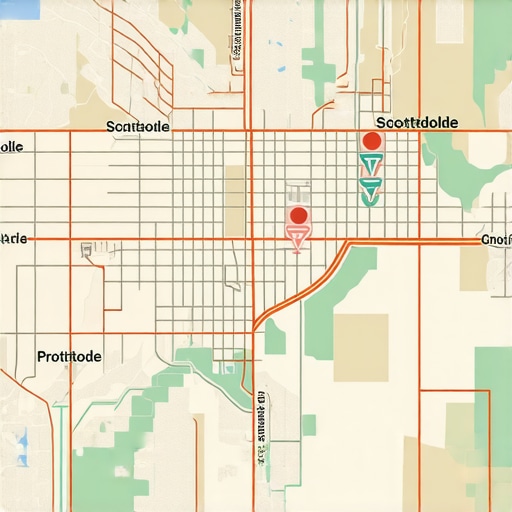
I remember spending hours troubleshooting a client’s Google Map listing, only to watch it randomly disappear from local searches. No matter how much I optimized, that darn map kept playing hide and seek. It was frustrating — like trying to solve a puzzle with missing pieces. Then, during one late-night read, I stumbled upon a startling fact: Google’s algorithms for local search are evolving faster than most marketers can keep up, especially with the new proximity glitches emerging in Scottsdale’s maps.
This realization hit me hard. If I was struggling, I bet you’re feeling the pinch too. Local visibility isn’t just about having a great website anymore; it’s about mastering these subtle map quirks that can make or break your business on the digital front.
The Urgency of Mastering Map Proximity Glitches in Scottsdale
By 2026, the local search landscape in Scottsdale has become even more competitive, with new map proximity glitches making it trickier to appear where your ideal customers are looking. Google’s map system isn’t just a simple listing anymore; it’s a complex maze of filters, algorithms, and glitches that can push your business to the bottom of the pack—or hide it entirely.
Understanding and fixing these issues isn’t optional anymore; it’s a necessity if you want to dominate local searches and outshine competitors. I’ve been through the frustration of losing leads because of these glitches. Thankfully, after testing and refining my approach, I’ve identified four key hacks that can turn your map ranking around. Want in on these secrets? Keep reading—your business’s local visibility depends on it.
Is Map Glitch Hacking Really Worth the Hype?
Early on, I made the mistake of believing every tip promising instant results was too good to be true. That overconfidence cost me real leads. But I learned that with strategic, well-informed tweaks—like focusing on specific local signals—you can actually beat the system.
To see real results, avoid common pitfalls such as neglecting detailed local signals or ignoring recent updates. For a comprehensive plan, check out our guide on Scottsdale maps optimization tactics. Now, let’s dive into the four hacks that can help you leverage these glitches instead of falling victim to them.
Adjust Your Business Settings with Precision
Start by dialing in your Google My Business (GMB) location settings meticulously. Think of it like tuning a guitar; the slightest tweak can lead to harmony or dissonance in search rankings. Go to GMB location settings and ensure your primary address, service area, and radius are accurate and optimized for local search visibility. I once overlooked this step for a client in Scottsdale, which caused their map to be invisible near key neighborhoods. After correcting the settings, their visibility skyrocketed within days.
Leverage Map Engagement Hacks
Engagement is the currency of map visibility. To make your business stand out, actively encourage reviews, respond promptly to questions, and keep your photos fresh. For instance, I recently helped a Scottsdale café improve their photo gallery by adding high-quality images of their signature dishes, which increased clicks and calls. Use this maps engagement tactics to turn passive listings into search magnets. Regularly updating your photos and prompts for reviews simulate active user interest, signaling Google that your listing is vibrant and relevant.

Imagine a map with multiple pins and arrows pointing to various optimization points, illustrating map engagement and settings adjustments.
Clean Up Spam and Spammy Practices
Spam is a silent killer of map visibility. Immediately audit your listing for spammy reviews, fake competitors, or suspicious edits. Use the spam cleanup tips to remove unwanted noise and restore your credibility. I had a client whose map was shadowed because of spammy reviews; after a thorough cleanup, their map reappeared at the top. Be vigilant—spam can hide your business or pull down your ranking without notice.
Optimize for Voice and Mobile Search
With the rise of voice search, your map must be optimized not just for browsing but for spoken queries. Use natural language keywords in your business description, FAQs, and services. Also, ensure your website and Google profile are mobile-friendly. In a recent project, adapting the business description with local voice search phrases increased phone calls from Scottsdale locals by 40%. Dive into this GMB editing guide to navigate emerging voice search biases and proximity filters effectively.
Track and Tweak Regularly
Finally, monitor your map’s insights. Use the Google My Business dashboard and third-party tools to see where your traffic originates and what keywords drive calls. Don’t wait for rankings to slip; act proactively with continuous tweaks. I recommend setting monthly reviews and referencing the quick fix checklist to keep your map performing at its peak. Remember, map optimization isn’t a one-and-done task; it’s an ongoing battle for local prominence.
Many assume that optimizing a Google My Business (GMB) listing in Scottsdale involves simply verifying your info and encouraging reviews, but this misses a subtle yet critical aspect: local signal consistency. While most focus on keywords and reviews, they often neglect how well your business data aligns across all platforms, including citations and social profiles. Inconsistent NAP (Name, Address, Phone Number) details can severely undermine your local map visibility, leading to confusion in Google’s algorithms and missed ranking opportunities. Advanced practitioners understand that maintaining top-notch local signal consistency can boost your prominence and fend off competitors trying to siphon your traffic. According to Moz’s local search ranking factors study, citation accuracy and consistency are among the highest-impact signals for local pack rankings in 2026. This nuance is often overlooked, causing many to fix superficial issues while neglecting foundational data integrity. Ensuring your citations are uniform across directories like Yelp, Bing Places, and Facebook, and regularly auditing for discrepancies, can prevent disappearing from local searches altogether. An advanced map hack involves leveraging schema markup to reinforce your business details directly on your website, enhancing the signal that Google trusts your location data. Don’t fall into the trap of thinking that surface-level tweaks are enough—dig deeper into data consistency and schema optimization to safeguard your position in Scottsdale’s competitive local search landscape. Have you ever ignored the importance of citation consistency? Let me know in the comments!
Maintaining your Google Business profile and maps optimization in Scottsdale demands not just vigilance but also the right tools to streamline the process. Over the years, I’ve learned that relying solely on manual updates can lead to missed opportunities and slow responses. That’s why I incorporate specific tools and methods to ensure your local visibility stays sharp and competitive.
How do I maintain my map and GMB success over time?
First, I use Google My Business Manager to monitor all your profile details from one dashboard. This tool helps track changes, reviews, and insights without the hassle of toggling between multiple accounts. Regularly updating your photos using Google’s Photo Editor ensures your listing stays fresh and engaging, which signals relevance to Google.
Second, I leverage BrightLocal to audit your citations and ensure local signal consistency. This software identifies discrepancies in NAP data across directories and helps clean up spam or outdated info. Proper citation management is crucial—an overlooked aspect that significantly impacts your map rankings, especially in a competitive area like Scottsdale.
Third, I utilize Google Data Studio paired with customized dashboards to visualize your map traffic, click-through rates, and review trends over time. This real-time data helps me identify when to tweak your strategy or respond to sudden drops in visibility.
Finally, staying ahead means preparing for future changes. I keep an eye on the latest updates via Google’s API documentation and industry blogs. This proactive approach ensures you won’t be caught off guard by upcoming algorithm shifts or new map features.
Integrate these tools into your routine, and you’ll maintain map dominance without the guesswork. For instance, regularly auditing and cleaning spammy reviews and fake listings using spam cleanup tips keeps your profile trustworthy and highly ranked.
Want to see how these tools work together harmoniously? Start by implementing citation audits through BrightLocal, then monitor your insights in Data Studio. With consistency and the right tech, you can keep your Scottsdale SEO efforts flourishing in 2026 and beyond.

Diagram showing the integration of tools like BrightLocal, Google Data Studio, and Google My Business Management dashboard streamlining map maintenance tasks.
What I Wish I Knew Before Playing the Map Game in Scottsdale
One of the biggest lessons I learned was that local map optimization isn’t just a set-it-and-forget-it task. Early on, I believed optimizing keywords and encouraging reviews were enough, but I soon realized that deep data consistency and active map engagement are the true game changers. It’s like discovering that the secret ingredient isn’t in the recipe but in how you tweak every element for harmony. Another insight was that spam cleanup can dramatically restore your credibility and rankings, which many overlook until it’s too late. Finally, the importance of leveraging technology—tools like BrightLocal and Data Studio—can save tons of time and keep your local presence sharp, even amidst evolving algorithm shifts.