
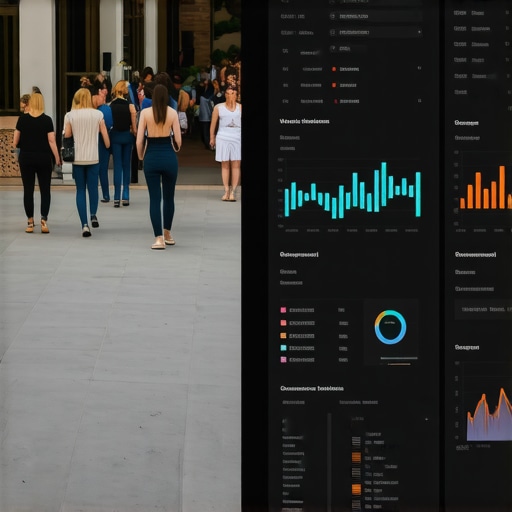
Why Your Google Business Profile Insights Don’t Match Your Scottsdale Shop’s Real Foot Traffic
You open your Google Business Profile (GBP) dashboard and see a number that makes your heart skip a beat: 1,500 interactions this month. Clicks, direction requests, and website visits are supposedly through the roof. Yet, as you stand in your boutique in Old Town Scottsdale or your service office near the Airpark, the silence is deafening. The “Ghost Traffic” phenomenon is real, and in 2026, it has become the single biggest source of frustration for Arizona business owners.
As a Google Business Profile Diamond Product Expert, I’ve spent years in the trenches of the local algorithm. I’ve seen thousands of “Verification Loops” and handled more suspensions than I care to count. What I can tell you is this: that dashboard is a window, but the glass is often distorted. In 2025 alone, Google users suggested over 80 million updates to business hours and attributes, highlighting the sheer volatility of the ecosystem. If you are relying solely on those green “up” arrows in your insights to measure success, you are likely missing the forest for the saguaros. We need to bridge the gap between digital vanity metrics and physical door swings.
The “Data Gap”: Understanding Digital Clicks vs. Physical Door Swings
The first thing we have to address is what a “click” actually represents. In the world of google business profile seo, not all engagements are created equal. We often see a massive discrepancy between “Discovery” searches and “Direct” searches. A discovery search happens when someone looks for “best taco shop Scottsdale” and your profile appears. A direct search is when they type your specific name. If your insights are heavy on discovery but low on conversion, you are suffering from an “Intent Mismatch.”
Consider the proximity of Scottsdale Fashion Square. Thousands of tourists and locals alike are constantly searching for services while within a three-mile radius of the mall. A user might click “Directions” on your profile simply to gauge how far you are from their current location or to see if you’re on their way home to Silverleaf. They have no intention of visiting *now*; they are performing a logistical check. This “logistical click” inflates your numbers without ever resulting in a transaction.
Furthermore, the way Google attributes interactions has become increasingly broad. A user who clicks on a photo to see your interior, then swipes through ten more photos, might be counted as a highly engaged user, but they could just as easily be a competitor doing research or a local resident admiring your architecture. To truly understand your performance, you must look beyond the aggregate. If you feel like your data is leading you astray, it’s often because Why Your Scottsdale Rank Tracker Is Lying to You About Your Map Position, providing a localized perspective that doesn’t account for user intent or physical movement patterns.
The 2026 Privacy Shift: Why Google’s Tracking Has Changed
If you’ve noticed that your “Popular Times” graph or your “Live” busyness data seems less accurate than it was a few years ago, you aren’t imagining things. We have entered a new era of data privacy that has fundamentally altered how google business profile seo functions. In a major strategic pivot, Google moved from storing “Timeline” and Location History data in the cloud to storing it locally on individual user devices.
This shift to on-device storage means that Google no longer has a centralized, real-time “god view” of every person’s movement in Scottsdale. Instead, they rely on aggregated, anonymized data models. When the data is stored on the phone, Google can only “see” it if the user opts into a specific set of sharing parameters, and even then, the data is often delayed to protect privacy. For a Scottsdale business owner, this creates a significant “reporting lag.” Your insights might show a spike in activity on a Tuesday that actually occurred on a Saturday, or worse, it might miss a flash-mob event at your shop entirely because the data didn’t meet the “anonymity threshold” required to report it.
This technical hurdle is why your physical foot traffic might feel disconnected from the dashboard. Google is essentially making an “educated guess” based on a smaller sample size of opted-in users. To navigate this, you need a more robust set of local seo tools that can help you track real-world signals rather than just relying on the filtered data Google chooses to show you in the native dashboard.
Proximity Bias and the “Intersection Disappearance”
One of the most common complaints I hear from Scottsdale merchants is the “disappearing act.” You might rank #1 for your primary keywords when you are standing at the intersection of Scottsdale Rd and Indian School Rd, but by the time you drive north to Camelback Rd, your business has vanished from the Map Pack. This is the “Proximity Bias” at work, and it’s more aggressive in 2026 than ever before.
Google’s algorithm is built on three pillars: Proximity, Relevance, and Prominence. Currently, proximity is heavily over-weighted. Google assumes that a user wants the *closest* result, even if it isn’t the *best* result. This creates a hyper-local bubble around your shop. If your shop is in the heart of Old Town, you are likely winning the battle for the immediate three blocks, but you are losing the battle for users in McCormick Ranch or North Scottsdale.
This is problematic because your “Interactions” might be coming from people who are physically very close to you but are just “window shopping” digitally. Meanwhile, the high-intent customers who are five miles away – and willing to make the drive – aren’t even seeing your profile. This is why Why Your Scottsdale Map Pin Disappears Every Time You Cross a Major Intersection is a critical concept to master. You have to build enough “Prominence” and “Relevance” to break the proximity “chokehold” that limits your visibility to a tiny radius.
The AI Overlay Problem: How 2026 Visual Maps Change Behavior
The introduction of “Gemini Omni” and advanced AI overlays has completely changed how Scottsdale residents interact with Google Maps. In 2026, we are seeing the rise of the “Zero-Click Local Search.” When someone searches for “best patio dining in Scottsdale,” the AI doesn’t just give them a list of links. It provides a synthesized summary: “Cafe Monarch has excellent reviews for ambiance, while The Herb Box is noted for its vegan options. Both are within 10 minutes of you.”
The user gets the answer they need without ever clicking on your specific profile. They might see your photos in the background of an AI-generated collage or read a snippet of a review that the AI pulled, but the “Interaction” isn’t recorded in your GBP Insights because the user never “opened” your profile. This creates a scenario where your foot traffic might actually *increase* because of your map presence, but your dashboard shows a *decrease* in clicks.
This is why understanding Why Your Scottsdale Map Pin Disappears in 2026 AI Overlays is so important. You are no longer just competing for a spot in the top three; you are competing to be the data source that the AI chooses to highlight. To win here, your data needs to be structured perfectly, and you need to use the right local seo tools to ensure your business attributes are “readable” by the Gemini engine.
Auditing the Discrepancy: Is Your Profile Actually Optimized?
Before you blame the algorithm entirely, we have to look at the “Proof of Presence.” Many Scottsdale businesses are suffering from self-inflicted wounds. Is your profile actually optimized for 2026 standards, or are you still using 2020 tactics? A common issue I see is a lack of high-quality, geo-tagged visual evidence that you are a legitimate, thriving business.
Google’s AI now performs a “Quality Scan” on every photo you upload. If your photos are stock images, or if they lack the metadata that confirms they were taken at your Scottsdale location, Google may de-prioritize your profile in favor of a competitor who has “Verified Visuals.” If your profile feels stagnant, it’s time for a deep dive. You should use a google business profile audit tool to check for inconsistencies in your NAP (Name, Address, Phone number) data across the web.
One major hurdle is the “Verification Loop.” If Google’s AI suspects that your business doesn’t have a physical presence – perhaps you’re a service-area business trying to claim a spot in a co-working space – you’ll find yourself in a cycle of suspensions. This is a primary reason Why Your Arizona GMB Fails the 2026 Proof of Presence Check. Google wants to see “boots on the ground.” If your digital footprint doesn’t match the physical reality of Scottsdale, your insights will always be a work of fiction. Using professional GBP ranking tools can help you identify these technical gaps before they lead to a full profile suspension.
3 Steps to Turn Digital Insights into Real Scottsdale Customers
So, how do we fix the disconnect? How do we make sure those 1,500 interactions actually result in people walking through your door? It requires a shift from “broad SEO” to “Hyperlocal Conversion.”
- 1. Hyperlocal Content Strategy: Stop posting generic business updates. Talk about Scottsdale-specific events. Are you near the Barrett-Jackson auction? Mention it. Is the Waste Management Open causing traffic changes near your shop? Post a map update for your customers. This signals to Google that you aren’t just a business *in* Scottsdale, but a business that is *active* in the community.
- 2. Master Review Velocity and “Hidden Logic”: It’s not just about getting five stars; it’s about the “Velocity” (how often you get them) and the keywords within them. Encourage customers to mention specific Scottsdale neighborhoods or nearby landmarks in their reviews. This builds relevance that helps you beat the proximity bias.
- 3. The 2026 AI Visual Proof: You need a consistent stream of new, high-resolution photos. Google’s AI is looking for “Proof of Life.” If your most recent photo is from two years ago, the algorithm assumes you might be closed. Check out 3 Scottsdale Map Photo Fixes for the 2026 AI Quality Scan to ensure your imagery is actually helping your google maps rank tracker performance.
Conclusion: Stop Chasing Vanity Metrics
The hard truth is that Google Business Profile Insights are a compass, not a GPS. They give you a general direction of where your digital presence is headed, but they don’t account for the nuances of Scottsdale’s unique geography, the 2026 privacy shifts, or the way AI has fundamentally changed user behavior. If you see high engagement but low foot traffic, it’s a signal that your “Digital Curb Appeal” is high, but your “Local Conversion Path” is broken.
Don’t get discouraged by the “Ghost Traffic.” Instead, use it as a catalyst to audit your profile, strengthen your proof of presence, and focus on the metrics that actually matter: phone calls, booked appointments, and physical visits. If you’re tired of guessing why your “Invisible Map Pin” isn’t attracting the right customers, it’s time to get a professional audit. Focus on conversion-driven local SEO, and let the vanity metrics take a backseat to real-world growth.