
The Real Reason Your Arizona Business Fails the Proximity Test on Mobile
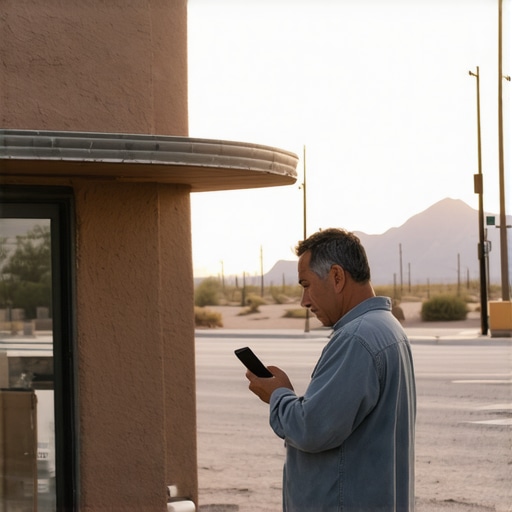
You’re sitting at your desk in Old Town Scottsdale, your coffee is hot, and your spirits are high. You pull out your phone, search for your primary service, and there you are – Number 1 in the Google Map Pack. You feel like a local titan. But then, you walk two blocks over to the local Dutch Bros for a mid-day pick-me-up. You search again. Suddenly, your business is gone. Not just moved down a spot, but completely vanished from the top three results. This is the “Desk vs. Street” paradox, and it is the primary reason why google business profile seo has become the most frustrating puzzle for Arizona business owners in 2026.
This phenomenon is known as the “Proximity Test.” It is the invisible wall that prevents a plumber in Gilbert from appearing to a homeowner in Mesa, or a law firm on Camelback Road from ranking for a user standing on Indian School Road. In the 2026 search landscape, ranking at your office is easy; ranking where your customers actually stand is where the real war is won. If you’ve ever wondered Why You Rank in Scottsdale at Your Desk but Not Two Blocks Away, you are currently failing the proximity test.
The Proximity, Relevance, and Prominence Triad in 2026
Google’s algorithm for local search has always been built on three pillars: Relevance, Distance (Proximity), and Prominence. However, as we move through 2026, the weight of these factors has shifted dramatically. While relevance (how well your profile matches the search query) and prominence (how well-known your business is) still matter, “Distance” has become hyper-sensitive due to the extreme precision of modern mobile GPS and 6G connectivity.
Effective google business profile seo is no longer just about stuffing keywords into your description or getting a handful of five-star reviews. It is now about providing “Proof of Presence.” Google’s AI doesn’t just want to know that your business *exists* at a certain address; it wants to see real-time signals that your business is active and engaged within a specific radius. This is why a google business profile seo strategy must focus on localized signals that extend beyond the four walls of your office.
In 2026, the “Prominence” factor has also been updated to include “Digital Footprint Density.” This means Google looks at how often your business is mentioned in local Scottsdale contexts – neighborhood blogs, local news, and even social media check-ins. If your digital presence is confined to your own website, you fail the prominence check the moment a user moves a mile away from your physical location.
Why Arizona’s Geography Breaks the Google Maps Algorithm
Arizona presents a unique challenge for the Google Maps algorithm, specifically what we call the “Phoenix Sprawl.” Unlike dense cities like New York or Chicago, the Phoenix metropolitan area is a massive, interconnected grid of suburbs. This layout creates “invisible walls” for map pins. Major intersections like the 101 and the 202, or the Scottsdale/Phoenix city line, often act as hard boundaries for local rankings.
We’ve observed that Why Your Scottsdale Map Pin Disappears Every Time You Cross a Major Intersection is often due to “Map Pin Drift.” In the sprawling suburbs of the Valley, Google’s algorithm struggles to determine where one service area ends and another begins. Consequently, it defaults to the tightest possible proximity radius to ensure “user satisfaction.” If you are a service area business (SAB) without a physical storefront, this proximity bias is even more aggressive.
The 2026 ranking reset specifically targeted Arizona businesses because of the high volume of “ghost offices” in the region. Google’s algorithm now cross-references your listed location with utility data, local business licenses, and even traffic patterns. If the “Phoenix Sprawl” has pushed your target audience further away from your physical base, you need a rank google business profile strategy that accounts for these geographic hurdles.
The 2026 AI Overlay & Visual Search Filter
One of the most significant shifts in google business profile seo is the integration of AI Overlays and AR (Augmented Reality) navigation. Today’s users aren’t just looking at a 2D map; they are often using “Live View” or AR-enabled dashboards in their vehicles. Google now uses sophisticated AI to scan the photos uploaded to your profile for “visual proof” of your business’s location.
If your profile features stock photography or photos taken at a different location, the AI flags a discrepancy. If your photos don’t match the GPS coordinates of your listing – or the visual data Google has collected via Street View and user-contributed imagery – you will fail the proximity test. This is a common reason Why Your Scottsdale Map Pin Disappears in 2026 AI Overlays. The algorithm essentially “ghosts” your business because it cannot verify your physical presence through visual data.
Furthermore, visual search filters now prioritize businesses that show “activity.” This includes recent photos of your team on-site in Scottsdale neighborhoods, photos of your branded vehicles parked in local driveways, and even images of local landmarks near your office. These visual cues serve as secondary GPS signals, reinforcing your proximity to the searcher.
Technical Failures: Why Your Profile is “Ghosting” Local Customers
Sometimes, the failure isn’t about your marketing; it’s about technical “Verification Loops” and human-audit failures. In recent years, the Phoenix area has been a hotbed for local SEO scams. As reported by AZ Family news, a surge in fraudulent listings and negative review attacks prompted Google to tighten the proximity radius and increase the frequency of “human-in-the-loop” audits for Arizona businesses.
If your profile has been flagged – even incorrectly – for suspicious activity, Google may place you in a “shadow-ban” state where you only appear for searches made within a few hundred feet of your location. To diagnose this, you must use a google maps rank tracker to identify these “dead zones.” If you see a heat map where you are green at your office but red everywhere else, you are likely caught in a proximity filter designed to weed out spammers.
Another technical failure we often see is the “Human-Audit” mismatch. If a Google contractor performs a manual check and finds that your Scottsdale office is actually a virtual space or a co-working desk without permanent signage, your proximity ranking will be decimated. This is Why Every Scottsdale Map Pin We Audit Has the Same Proximity Error: the business is trying to claim a proximity they haven’t technically earned in the eyes of a human reviewer.
4 Fixes to Reclaim Your Map Position in Scottsdale
Reclaiming your spot in the Map Pack requires a move away from traditional “keyword” thinking and toward “signal” thinking. Here are four actionable fixes to beat the 2026 proximity bias:
- 1. Hyperlocal Content Clusters: Stop writing generic blog posts. Instead, write about specific Scottsdale neighborhoods like Gainey Ranch, McCormick Ranch, or DC Ranch. Mention local events, specific street intersections, and nearby landmarks. This builds “Relevance” that is tied to specific coordinates.
- 2. Strategic Map Embeds: Don’t just embed a map of your office on your contact page. Embed maps that show your service area, including directions from major Scottsdale hubs. Check out The Map Embed Strategy That Actually Moves the Needle for Scottsdale Contractors for a deep dive into this technique.
- 3. Mobile-First Review Strategy: The “where” of a review is now as important as the “what.” Encourage your customers to leave reviews while they are physically at your place of business or while you are at their home. When a customer leaves a review, their mobile device sends a GPS signal to Google. If 50 people leave reviews for your Scottsdale business while they are actually *in* Scottsdale, it provides massive “Proof of Presence” that helps you rank higher on google maps.
- 4. Audit Your Proximity Heat Map: You cannot fix what you cannot see. Use a google business profile audit tool like SEO Viper to generate a grid-based ranking report. This will show exactly where your “ranking wall” is, allowing you to target your local ad spend and content strategy to those specific weak spots.
By implementing these 4 Scottsdale SEO Tactics to Beat 2026 Map Proximity Bias, you can begin to push your ranking radius outward, capturing customers who are miles away from your front door.
Conclusion: Moving Beyond the Office Desk
In the high-stakes world of Arizona business, your Google Business Profile is your most valuable digital asset. However, the “Proximity Test” has proven that you can’t just set it and forget it. Proximity is the most difficult factor to “game” because it relies on real-world, real-time data – GPS signals, AI visual verification, and genuine local engagement.
The 2026 shift toward AI-driven search and “Autonomous Vehicle Maps” means that your business must be more than a pin on a map; it must be a verified, active part of the Scottsdale community. If you are struggling to maintain your visibility, it’s time to move beyond the office desk and start building a strategy that accounts for the physical reality of the Phoenix sprawl.
Don’t let your competitors steal your local traffic just because they are a block closer to the customer. Whether you need a professional google maps ranking service or you want to take control of your data with SEO Viper Tools, the time to act is now. Reclaim your proximity, verify your presence, and dominate the Scottsdale Map Pack once and for all.