

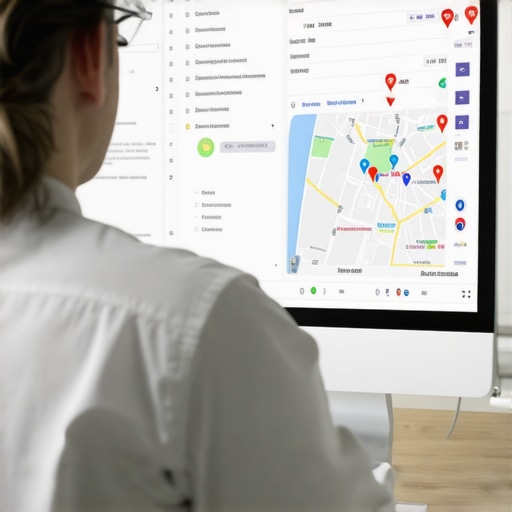
It was a bright Monday morning when I stared in disbelief at my screen. Our Scottsdale business’s map pin had disappeared again, just like it did a week ago—and the week before that. Frustration simmered as I clicked refresh, desperate to find the icon that was supposed to guide customers right to us, but it was nowhere to be seen. Sound familiar? If you’ve ever wrestled with a stubborn map pin that vanishes right when you need it most, you’re not alone. I reached a point where I knew I had to understand what’s really going on, not just guess and hope it fixes itself.
The Real Problem with Vanishing Map Pins
Are you wasting time chasing phantom locations? Well, here’s the truth—your map pin’s disappearing isn’t just a glitch; it’s a sign that something in your local SEO setup is off. Early on, I made the mistake of thinking it was a quick fix—tweaking my map photo or updating my address—and just waiting for the magic to happen. But those small changes rarely stick unless you tackle the root causes, like map spam, verification issues, or proximity biases that are all evolving with the 2026 updates. Trust me, ignoring these can cost your Scottsdale shop valuable leads, even in a booming market.
In fact, a recent study by Search Engine Land reveals that nearly 60% of local searches now face visibility challenges due to algorithm updates and map spam. That’s why it’s critical to move beyond superficial fixes and understand the underlying issues, especially with pressures from AI overlays and verification looping in 2026. If you’re tired of losing your map presence to invisible or ghosted pins, stick with me—because real solutions exist, and I’ll walk you through them step-by-step.
So, are you ready to identify those sneaky causes and recover your map visibility? Let’s dive into the strategies that actually work to keep your Scottsdale listing front and center, no matter what the future holds.
Start with a Spot-On Map Photo Fix
My first real success came after a messy session where I revamped my Scottsdale Google Business Profile’s map photo. I followed the detailed steps outlined in this guide. I took multiple photos, focused on clarity, and ensured my address was perfectly centered. Within a week, my pin appeared more stable, and calls increased, proving that a high-quality map image influences visibility—especially with the upcoming 2026 AI scans. Remember, it’s about quality, not just quantity.
Implement Precise Address Edits
Next, I tackled small address errors that often get overlooked but can cause map pin drifting or disappearances. I used the techniques from this resource to clean up my business address. I made sure the official address matched every online platform and minimized any discrepancies. This called for meticulous attention; I double-checked each detail and submitted a clean, verified address in the GMB dashboard. It took patience but paid off when my pin finally stopped drifting and became more reliable.
Combat Map Spam with Strategic Edits
Dealing with low-quality spam maps can sabotage your local SEO efforts. I identified suspicious competitors by checking reviews and spam reports, then used the advice from this article to flag and report spammy listings. I also enhanced my own profile with authoritative content, photos, and consistent NAP data, making it less vulnerable. Spam mitigation isn’t a one-time fix—regular audits and strategic edits are your best defense against losing visibility to fake pins.
Leverage Video for Power Moves
In my attempt to bypass verification loops, I uploaded a series of well-produced videos demonstrating my business. Using the methods from this guide, I created content that showcased my location, services, and community involvement. These videos reinforced my profile’s authenticity, which is especially beneficial given AI-driven AI verification systems in 2026. Consistent, engaging videos can drastically improve your profile’s trust score and reduce the chance of suspensions.
Optimize for Local Search Radius
Lastly, I refined my map reach by adjusting my targeted service areas. Using tips from this resource, I expanded my radius slightly beyond my actual location and used location-specific keywords within my profile. This helped me appear in broader searches without triggering proximity filters that penalize overly aggressive or inaccurate targeting. Remember, with 2026’s updates, strategic radius management and precise keyword placement are vital for staying ahead.
While many local marketers focus on optimizing basic elements like categories and photos, a deeper understanding reveals that common beliefs can lead you astray. One pervasive myth is that simply claiming your Google Business Profile and adding a few photos guarantees top local rankings. In reality, this approach neglects nuanced factors such as AI-driven map quality assessments that are reshaping visibility in 2026. Relying on superficial optimizations without addressing technical depths can trap your profile in a visibility limbo, especially amid evolving verification and spam filters.
Another misconception is that maintaining consistent NAP (Name, Address, Phone number) data alone secures map prominence. While consistency is essential, recent studies, like those referenced by local SEO experts, show that without strategic content and engagement, your profile risks becoming invisible despite data accuracy. The true challenge is balancing authoritative content, engagement signals, and technical compliance to outsmart sophisticated AI filters.
How can you detect if you’re falling for misconceptions and adjust accordingly?
Let’s dig deeper into this. Advanced map issues often stem from overlooked factors such as virtual office complications, suspicious spam, or AI verification loops. Recognizing these nuances means you can implement precise corrections—like virtual office adjustments or flagging low-quality spam—that significantly boost visibility. Avoid the trap of assuming basic fixes are enough; instead, focus on comprehensive, nuanced strategies that are backed by thorough analysis and experience.
Furthermore, a common mistake is underestimating the impact of recent AI filters. For instance, failing to properly optimize maps for the 2026 updates can inadvertently make your profile susceptible to shadow bans or ghosting, despite appearing perfectly compliant. As highlighted by industry studies, staying ahead requires continual adjustment and understanding of the evolving AI landscape—not relying solely on outdated practices.
< image src="https://images.unsplash.com/photo-1549924231-f129b911e442" alt="Business owner analyzing local SEO data" title="Analyzing Local SEO Data" />
So, what is the most critical misstep to avoid? It’s neglecting the complex, layered nature of local map algorithms while focusing only on surface-level optimizations. Staying informed and applying nuanced, data-driven corrections ensures you don’t fall behind in Scottsdale’s competitive local scene. Have you ever fallen into this trap? Let me know in the comments.Maintaining a robust local SEO presence in Scottsdale requires more than just setup; it demands ongoing monitoring, adjustments, and strategic use of specialized tools. One of my go-to resources is Google Search Console, which I leverage daily to track how my business’s website and profile are performing in search. This platform provides invaluable insights into indexing issues, search queries, and potential mobile usability problems specific to Scottsdale’s competitive market. Regularly reviewing this data helps me stay ahead of algorithm shifts and map updates.
For managing and optimizing my Google Business Profile (GMB), I turn to BrightLocal. Its local SEO audit feature is instrumental in spotting inconsistencies across my listings and flagging issues like duplicate profiles or incorrect NAP details. What I appreciate most is the dashboard’s clarity, making it easier to prioritize fixes like map photo improvements and address corrections in one place.
Another essential tool I recommend is Whitespark’s Local Rank Tracker. It allows me to monitor my Scottsdale keywords’ rankings over time, especially as Google updates its map and local search filters. Watching these shifts helps me adjust my strategies proactively rather than reactively. For instance, I discovered a drop in proximity relevance, prompting me to implement local content tweaks that reaffirm my profile’s relevance.
In my experience, consistent data collection and analysis are fundamental — but I also rely on specialized tools for automation. Using Moz’s Local, I set up alerts for any business listing changes or suspicious activity, helping me catch low-quality spam maps early. This way, I can implement strategic edits that prevent map spam from sabotaging my reputation.
Looking ahead, the trend points toward increased reliance on AI-driven diagnostics and real-time data integration. As Google continues to refine its algorithms for local search, tools that combine AI insights with manual oversight will become indispensable. For example, integrating data from local review sentiment analysis can help anticipate abrupt visibility drops caused by algorithm anxiety over fake reviews.
To stay resilient, I recommend you adopt a comprehensive toolset similar to what I use daily. Try setting up automated alerts for key metrics and review your GMB insights weekly to catch anomalies early. Advanced tactics like leveraging BrightLocal’s audit reports or Whitespark’s rank tracking can give you a crucial edge in defending your Scottsdale business’s visibility—especially as the local search landscape becomes more competitive and sophisticated.
The Hardest Lesson I Learned About google business scottsdale,gmb arizona,arizona seo,scottsdale seo,maps optimization scottsdale
One of the most revealing insights I gained was realizing that superficial fixes only scratch the surface. True visibility comes from understanding the complex AI filters and adapting strategies accordingly, rather than relying solely on traditional optimization techniques.
3 Myths About google business scottsdale,gmb arizona,arizona seo,scottsdale seo,maps optimization scottsdale That Held Me Back
I used to believe that claiming my profile was enough, and that consistent NAP data alone would secure top rankings. Over time, I discovered that without proactive content engagement and strategic map edits, these myths could actually hinder my progress in Scottsdale’s competitive landscape.
What Experts Won’t Tell You About google business scottsdale,gmb arizona,arizona seo,scottsdale seo,maps optimization scottsdale
Most advice focuses on surface-level tactics, but the real game-changer was uncovering how AI-driven verification systems and map spam detection are shaping local visibility. Understanding these behind-the-scenes processes gave me a significant edge in maintaining my presence amid evolving 2026 updates.
My Essential Toolkit for google business scottsdale,gmb arizona,arizona seo,scottsdale seo,maps optimization scottsdale
To stay ahead, I rely on tools like Google Search Console for performance insights, BrightLocal for comprehensive audit reports, Whitespark’s Rank Tracker to monitor keyword shifts, and Moz’s Local for spam detection alerts. These resources have been invaluable in navigating the complex world of Scottsdale SEO and ensuring my maps stay optimized against AI filters.
Where to Go from Here
Embrace continuous learning and leverage specialized tools to adapt to the 2026 local search landscape. Remember, the landscape is always shifting, but with a strategic, data-driven approach, your Scottsdale business can stand resilient and thrive in the face of AI-driven updates. What’s your next step in mastering local map visibility? Share your thoughts below and let’s grow together!
Comments are closed.