The Tactics That Help Arizona Service Pros Rank on Google Maps Fast
In the blistering heat of an Arizona summer, when an AC unit fails in Scottsdale or a pipe bursts in Tempe, homeowners don’t scroll through pages of search results. They open Google Maps. As a digital marketing strategist who has spent years navigating the shifting sands of the Southwest’s digital landscape, I’ve seen firsthand that your google business profile seo is no longer just a “nice-to-have” feature – it is your primary storefront. In 2026, the “Map Pack” (those coveted top three spots) is where 85% of all local service traffic resides, according to recent Tempe Friends Group research. If you aren’t in that top three, you are essentially invisible to the thousands of ready-to-buy customers searching for your expertise right now.
For Arizona service pros – plumbers, landscapers, HVAC technicians, and contractors – the competition has never been more fierce. The 2026 algorithm has evolved to prioritize not just who you are, but how much the local community trusts you and how effectively you can prove your physical presence. In this comprehensive guide, I will break down the exact tactics we use at Scottsdale SEO Services to help local pros rank google business profile listings at the top of the pack, ensuring that when the “near me” search happens, your business is the first one they call.
The 2026 Local Ranking Algorithm Breakdown
To dominate the local market, you must understand the mechanics behind the curtain. The 2026 Google Maps algorithm is built on three primary pillars: Relevance, Distance, and Prominence. However, the weights assigned to these pillars have shifted significantly in recent years. Based on data from WebVitalAgency, Google Business Profile (GBP) signals now account for a staggering 30-35% of total ranking weight, followed by Proximity at 20-25%, and Review signals at 15-20%.
Relevance is how well your listing matches what someone is searching for. In 2026, this isn’t just about keywords; it’s about AI-driven visual overlays. Google’s AI now scans the photos you upload to your profile to identify equipment, branded trucks, and job sites. If you’re a landscaper in Scottsdale, and your photos consistently show desert xeriscaping projects, Google’s relevance engine rewards you for those specific queries.
Distance (Proximity) remains a major factor, but it is no longer an insurmountable wall. Many service pros struggle because they think they can only rank within a two-mile radius of their office. By implementing The Proximity Fix That Puts Your Scottsdale Map Pin in Front of Ready-to-Buy Local Customers, you can signal to Google that your service area is much broader than your physical location, effectively “stretching” your map pin across the Valley.
Prominence is essentially your digital “fame.” This is calculated by how much information Google has about you from across the web – links, articles, and directories. In the age of AI, behavioral signals like “click-to-call” and “request a quote” directly through the Maps interface are massive indicators of prominence. If users are interacting with your listing more than your competitors, Google views you as the authority and pushes you higher.
Optimization Tactics for Service Area Businesses (SABs)
Service Area Businesses face a unique challenge: you often don’t have a retail storefront where customers visit. In the past, this led many Arizona contractors to use “ghost offices” or UPS Store addresses – tactics that in 2026 will lead to an immediate and permanent suspension. To succeed today, you must master google business profile optimization specifically for the SAB model.
First, your Service Area settings must be precise. Don’t simply check “Arizona.” Instead, define your boundaries by specific zip codes or cities like Scottsdale, Mesa, Gilbert, and Chandler. This hyper-local targeting prevents your profile from being spread too thin and losing authority. One of the most common mistakes I see is failing to maintain NAP (Name, Address, Phone) consistency across the web. If your business is “Scottsdale Plumbing & Air” on Google, but “Scottsdale Plumbing” on Yelp, the algorithm sees a conflict. This lack of clarity is Why Landscaping Jobs in Scottsdale Go to the Business with the Best Map Pin; the business with the most consistent data wins the trust of the algorithm.
Second, selecting the correct **google business profile categories** is critical. You are allowed one primary category and up to nine secondary categories. If you are a general contractor, don’t just list “General Contractor.” Add “Kitchen Remodeler,” “Bathroom Remodeler,” and “Deck Builder.” This ensures you appear in specific searches rather than just broad ones. For those looking to scale their efforts, using a google maps ranking service can help automate the monitoring of these categories to ensure you are always aligned with current search trends.
The 2026 Verification & Trust Hurdle
The days of receiving a simple postcard in the mail to verify your business are gone. In 2026, Google has implemented the “Video Verification Loop” and the “Proof of Presence” check. This is the single biggest hurdle for Arizona service pros today. Google now requires a live, continuous video recording that shows your professional equipment, your branded vehicle, and your ability to access the business management tools (like your laptop or point-of-sale system).
Many business owners find themselves stuck in a loop where their video is rejected without explanation. This usually happens because they fail to show the “local” connection – for example, not showing a street sign or a recognizable Arizona landmark in the background. If you are struggling with this, refer to our guide on 4 Google Business Profile Scottsdale Fixes for 2026 Video Proof. This walkthrough explains how to record a video that passes the AI-scan on the first try, avoiding the dreaded “manual review” queue that can take weeks to resolve.
Furthermore, the 2026 “Trusted Badge” has become a major conversion factor. This isn’t just the Google Guaranteed checkmark; it’s a dynamic trust score based on your verification history and lack of profile edits. Constant changes to your business name or hours can trigger a “re-verification” event, which can take your listing offline during your busiest season. Stability is the key to maintaining your rank.
Advanced Review & Reputation Strategies
Reviews have always been important, but in 2026, the *quality* and *velocity* of your reviews are what drive you into the Top 3. Google’s Natural Language Processing (NLP) now reads the content of your reviews to see if they mention specific services and locations. A review that says “Great job!” is nowhere near as powerful as one that says, “Best AC repair in Phoenix, they fixed my unit in 110-degree heat!”
To rank higher on google maps, you need a system that encourages customers to use these keywords naturally. We recommend The 3-Step Review Request That Actually Gets Arizona Customers to Leave Feedback. This method focuses on the “moment of delight” – the exact second the job is finished – and guides the customer to mention the specific service they received.
Review velocity – the rate at which you receive new reviews – is also a ranking signal. If you get 50 reviews in one month and then zero for the next three, Google views this as suspicious or indicative of a business that is no longer active. A steady stream of 2-3 reviews per week is far more effective for long-term local seo tools integration. Remember, responding to every review (both positive and negative) is mandatory. In 2026, Google’s AI tracks the “Response Time” of business owners. Fast responses signal a highly active and reliable service provider.
Technical Tools & Local Authority
Beyond the profile itself, your “Local Authority” is built through technical SEO and local backlinks. For an Arizona business, this means getting listed in niche directories like the Greater Phoenix Chamber of Commerce, the Arizona Registrar of Contractors (ROC), and local community blogs. These “citations” act as votes of confidence for your business’s location and legitimacy.
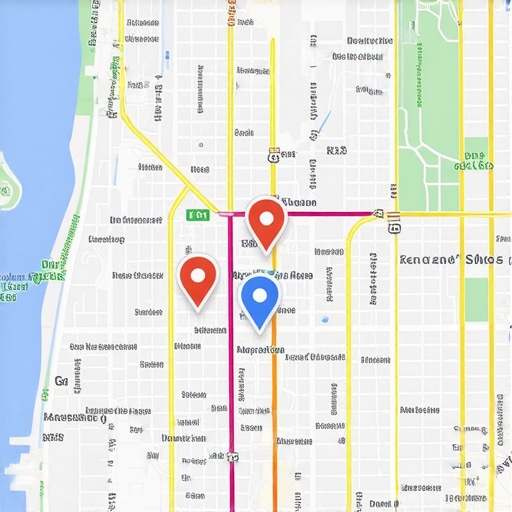
Using local seo tools can help you track your “geo-grid” rankings. A geo-grid shows you exactly where you rank on the map at different GPS coordinates. You might be #1 when someone searches from your office, but #10 when they search from three miles away. Identifying these “weak spots” allows you to target your local backlink strategy to specific neighborhoods.
Additionally, pay attention to the “Trusted Badge” signals. Our research into Arizona SEO: 5 Hidden Tactics to Win the 2026 Trusted Badge reveals that businesses that link their GBP to a high-authority, locally-optimized website rank 40% faster. Your website should have “Local Schema” markup that tells Google exactly which cities you serve, matching the service areas on your Google Business Profile perfectly.
Conclusion: Claim Your Spot in the Arizona Map Pack
The landscape of Google Maps is more competitive than ever, but for the Arizona service pro who is willing to adapt, the rewards are massive. By focusing on deep relevance, mastering the new video verification requirements, and maintaining a steady velocity of keyword-rich reviews, you can dominate the local market.
Don’t let your competitors take the leads that should be yours. Whether you are looking for a comprehensive google maps ranking service or you want to handle the optimization yourself, the time to act is now. The “Map Pack” is the new front door for your business – make sure you’re the one standing there when the customer knocks. If you’re ready to see real results, contact Scottsdale SEO Services today for a professional google maps seo audit and let’s put your business on the map.